
Posted by Mia Wren on 8th Sep 2026
How to Stop Yorkshire Puddings Sticking to the Tin
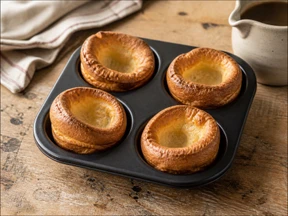
There is a particularly disappointing moment when you get those perfect looking yorkies out of the oven and realise you have to rip them to pieces just to get them off the pan. Bye bye instagram-perfect dinner shot.
I've definitely experienced it. Roast on the table, three kids waiting, and I'm stood at the hob levering a pudding out in three pieces and telling everyone they will still taste awesome although they look like they've gone through a combat and lost.
The tray then sat in the sink for two days, which is pretty much the worst thing I could have done to it.
Luckily I have learnt a thing or two in my Yorkshire baking years (as a non-native Yorkshire pudding baker I had to learn it all from scratch) and I'm happy to share these secrets with you.
Why they stick?
Either you were skimpy with the fat thinking now is the right time to be healthy, or it wasn't hot enough. Fat needs to be really hot, and when it is, it creates a layer between the batter and the metal from the first second. So if the batter is not spitting when you pour it in the pan, you're already in trouble.
The coating has been worn off. Every scrub with a scouring pad, every trip through the dishwasher, every knife run round the edge takes a bit more. Tins don't fail all at once. They stick a little, then a bit more, and one Sunday they weld.
They were left in the tin. A pudding cools, contracts and settles onto the metal. If you leave them in for a while they can set like they've been glued.
I lose puddings to that third one more than the other two combined, because I'm always multitasking and not paying enough attention to what matters.
So get that fat properly hot
This is the bit I rush every single time, because the potatoes always want turning at exactly the same moment. Eight minutes though. Set a timer if you're anything like me.
How to prepare the tin so nothing sticks
- Be generous with the fat: a proper teaspoon in each cup — beef dripping, lard, or a plain oil that can take the heat. Not olive oil. And not a sad little smear, you want an actual small pool in there.
- Take it up the sides: brush or tilt that fat up the walls of the cups. This is the bit everyone skips and it's exactly where puddings grab hold, because that's where the fat has run away from.
- Heat the tin with the fat in it: empty, at 220°C, for a good eight to ten minutes. The fat should shimmer and move around like water.
- Pour fast, from a jug: straight into that hot fat. It should hiss the second it lands.
- Get them out quickly: bake without opening the door, then lift each pudding out within a minute of the tray leaving the oven.
If you want the whole argument about which fat and why, we've written that one up separately in best oil for Yorkshire puddings. Short version: dripping and lard beat oil, and olive oil can stay in the cupboard where it belongs.
Your washing-up is doing more damage than your baking
I used to think a tray either was non-stick or it wasn't, end of story. Then I started testing them properly for work, over months rather than one Sunday, and the pattern was really obvious. The trays that stopped releasing were the ones that had been in the dishwasher.
Nothing wears a coating out faster. Hot detergent, hours of it, week after week. A tray that goes in the dishwasher every Sunday will start sticking within a year or two, and the poor person using it will be blaming their batter the entire time.
Soaking is nearly as bad, and of course it's what we all do with a stuck tray, because it feels like the kind option. Two days in a sink full of water is two days of water sitting in whatever tiny scratches are already there.
I know. I did it, and then I bought a new tray.
You'll find people online telling you to never wash a Yorkshire tin at all, just wipe it with kitchen roll and keep it for puddings and nothing else. That's genuinely good advice for an old uncoated tin that's built up its own seasoned layer, and it's how a lot of British grandmothers ran their kitchens. On a modern coated tray you don't need to go that far. Warm water, a soft cloth, dry it properly, put it away. That's it. If you like the idea of building up a bit of extra release anyway, our guide on whether you need to season a new baking tin goes through what actually works.
And keep metal away from it. That knife you used to lever a pudding out last Sunday is the reason the next lot stick harder.
Right, one is already welded in. Now what?
Do not reach for the knife. I know it's right there.
Take a thin silicone or wooden spatula, slide it down the side of the cup and work it all the way round the edge first, before you try to lift anything. Most puddings are only holding on at the rim. If it still won't shift, put the whole tray back in the hot oven for a minute. The fat melts again and they usually let go on their own, which feels like cheating and is honestly my favourite trick in this entire article.
For the tray afterwards: warm water, soft cloth, patience instead of force. If something is really baked on, a paste of bicarbonate of soda left on it for ten minutes will lift it without a scourer anywhere near your coating.
And sometimes it really is just the tin
Sometimes you do everything right and they still stick, and at that point I'm afraid it's the tray.
I know, I would say that, wouldn't I. So don't take my word for it — pick the tray up and try to bend it with your thumbs. If it gives at all, it's been giving in the oven too.
Here's why that matters. Yorkshires need a seriously hot oven, 220°C and upwards. Thin aluminium expands unevenly at that heat and buckles. Every buckle flexes the coating that's bonded to it, and coatings don't flex — they craze, then lift, then peel. That's the whole reason a cheap tray goes from fine to hopeless in a season or two, and it's the same story we tell in bakeware that doesn't warp.
Heavy-gauge carbon steel doesn't flex, so the coating stays exactly where it was put.
That's why we can put a 10-year guarantee on ours and sleep perfectly well at night.
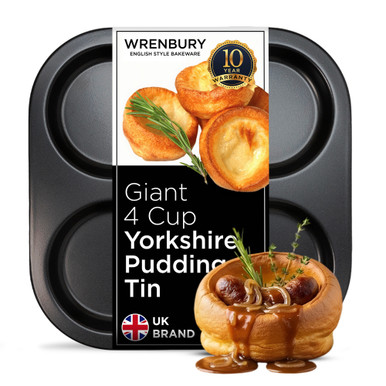
4 Cup Non-Stick Yorkshire Pudding Tray
£18.99
Shallow 2cm cups in heavy-gauge carbon steel — the shape that gives you a crisp shell and a proper well for gravy, and lets go without a fight.
View product
12 Cup Yorkshire Pudding Tin Tray
£19.99
Twelve smaller cups for a full table, same heavy-gauge carbon steel, PTFE and PFOA free coating.
View product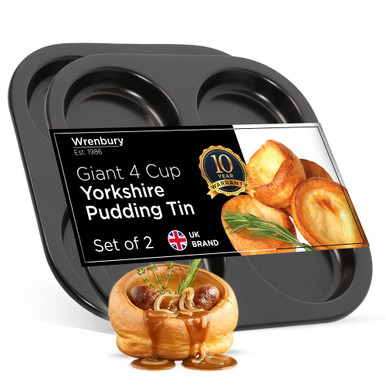
4 Cup Yorkshire Pudding Tray Set of 2
£29.99
Two trays, so the whole table gets theirs at once instead of in shifts.
View productBoth shapes live in the full Yorkshire pudding tin range, and if you're torn between a four-hole yorkshire pudding tray and a twelve-hole tin before you buy, we go through it properly in our best Yorkshire pudding tin UK guide.
Common questions
Why do mine stick to the sides but not the bottom?
Because the fat ran off the sides. It pools in the base of the cup, which is why bases are usually fine and walls are where the trouble is. Brush it up the sides before the tin goes in, and top the cups up if it's a deep tray.
Do I still need fat in a non-stick tray?
Yes, and not really because of sticking. Yorkshire puddings need hot fat to rise at all, that first sizzle is what drives the puff. What a good non-stick coating buys you is being able to use a sensible amount rather than a swimming pool of it, and getting them out cleanly at the end.
Will the dishwasher really ruin my tin?
It will shorten its life a lot. Dishwasher detergent is abrasive and alkaline and it runs hot for a long time. Washing a Yorkshire tray by hand takes about forty seconds, which is genuinely less time than loading it into the machine. Same rule keeps every tin going for years, and there's more on that in how to make your baking tray last 10 years.
Should I just switch to silicone?
You can, and yes, things will stop sticking. You'll also lose the crisp base and a good bit of the rise, because silicone doesn't conduct heat the way metal does — the batter warms up slowly instead of hitting something hot. If it's the sticking that's annoying you, fix the fat and the tray. If it's the washing-up that's annoying you, silicone is a fair trade and I won't judge.
Can I just use a muffin tin?
You can, loads of people do. Muffin cups are deeper and steeper, so you get a denser, more bread-like pudding and a harder job getting it out, because there's more wall for it to cling to. It works. It just isn't the pub Yorkshire you had in your head.
Mine stick and they don't rise either. Same problem?
Very often, yes — cold fat causes both. If the rise is the bigger frustration, start with why didn't my Yorkshire pudding rise and the ultimate Yorkshire pudding guide, and if you suspect the batter itself, Yorkshire pudding batter ratios has the numbers.
So, the short version
Hot fat, plenty of it, brushed up the sides. Out of the tin within a minute. Hand wash, no metal, no dishwasher.
And if you've been doing all of that for years on a tray you can bend with your thumbs, then I'm sorry, but the tray has been the problem this whole time.
Same three rules work for bread, by the way — that one's written up in how to stop bread sticking to the tin.