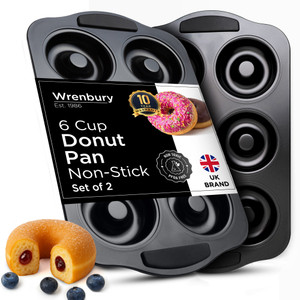
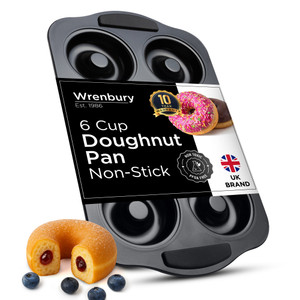
Baked doughnuts, not fried: the ring shape and soft crumb without a pan of hot oil. Each pan bakes six full-size 4-inch (10cm) rings in heavy-gauge carbon steel, so all six brown at the same rate, and the non-stick coating made without PTFE or PFOA turns them out whole for glazing.
A donut pan, doughnut tray, doughnut tin and doughnut mould are all the same thing: this shape of six-ring baking tray. Ours is pressed steel rather than the floppy silicone sort, which is why the rings colour evenly and the pan sits flat in the oven. The single pan covers a weekend batch; the set of two does twelve at once, which matters because baked doughnuts are best the day they're made and a dozen rarely survives one.
Beyond the doughnut
The ring cups shape small bagels and bagel-style breakfast bakes, and doughnut-shaped sponges take a glaze beautifully. Pipe or spoon the batter in, fill about two-thirds, and expect a lightly domed top you can dip, sugar or ice. Care is the usual carbon steel routine: hand wash, dry promptly, and the 10-year guarantee covers the rest, with the full routine in the care and use guide.
Donut pan questions, answered
Do baked doughnuts taste like fried ones?
They're a different, lighter thing: closer to a glazed cake ring than a yeasted fried doughnut, with no oil to heat and no smell in the kitchen. Dipped in cinnamon sugar or chocolate glaze, nobody sends them back.
What size doughnuts do the pans make?
Full-size 4-inch (10cm) rings, six per pan. Bakery size rather than minis.
Why steel rather than a silicone donut mould?
Silicone insulates, so the rings come out pale and the mould flops when you move it. Carbon steel conducts, so the doughnuts brown properly, and the pan slides in and out of the oven without a wobble.
Is it hard to get the batter into the rings?
No. Piping from a bag (or a freezer bag with the corner cut) gives the neatest fill, but a spoon works fine. Fill about two-thirds so the hole stays open as the ring rises.