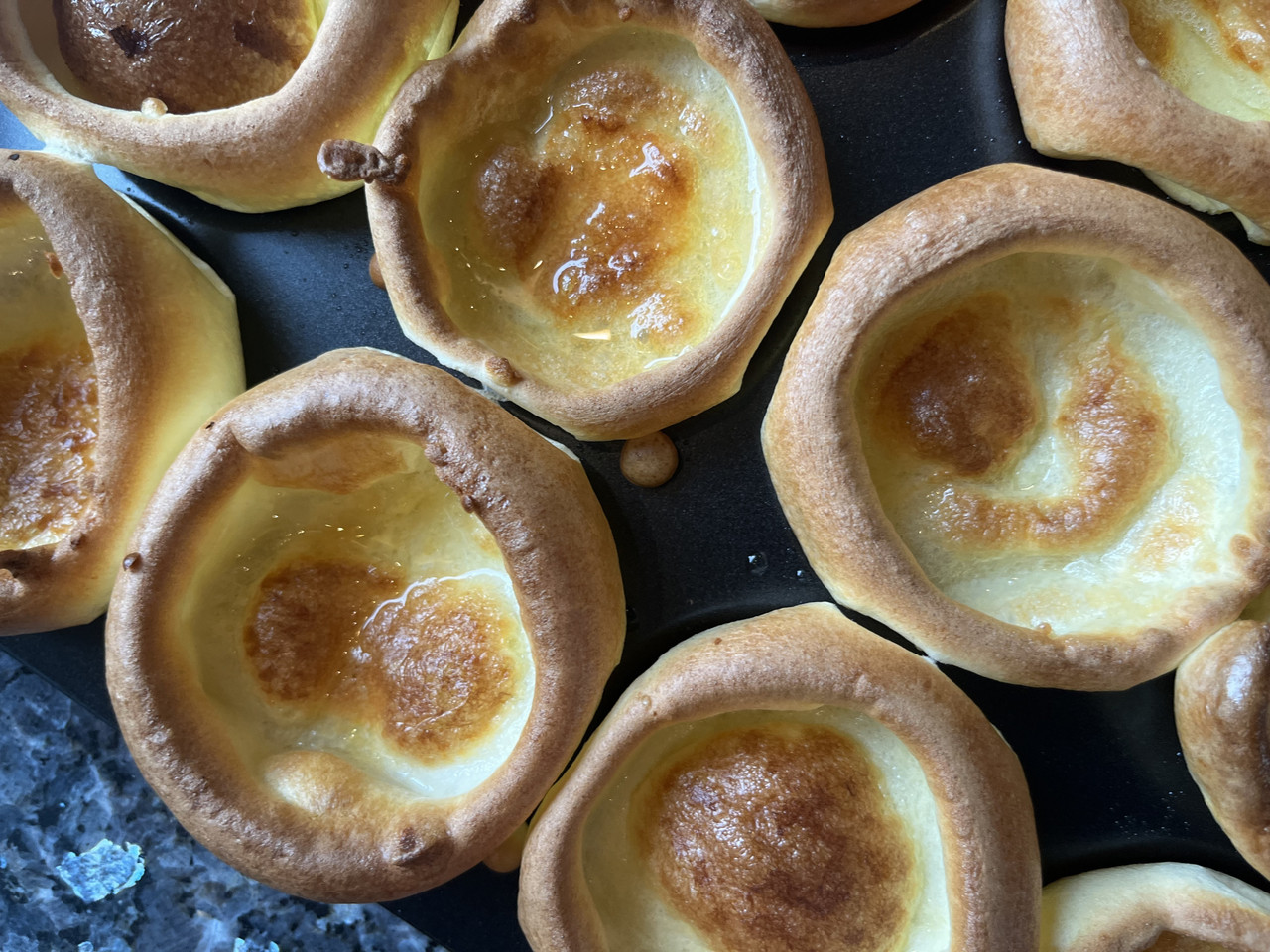
A proper Yorkshire pudding needs a shallow cup. Deep muffin-style tins hold the batter in, so it steams instead of climbing, and you get something dense and gummy at the bottom with a modest puff on top. Our Yorkshire pudding tins use wide, shallow cups so the batter spreads thin, hits the hot fat with a sizzle, and climbs the sides into a tall, crisp shell with a natural well for gravy.
The other half of the equation is heat. Yorkshire puddings want a tin that gets properly hot and stays hot when cold batter lands in it. Heavy-gauge carbon steel holds and spreads that heat far better than the thin pressed tins on most supermarket shelves, which is why all 12 rise together instead of six golden ones at the front and six pale ones at the back. It is also why these trays hold their shape at roasting temperatures rather than twisting. The PFOA and PTFE-free non-stick coating means they lift out whole, no prying with a knife.
12 cup or 4 cup?
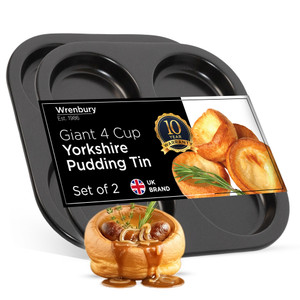
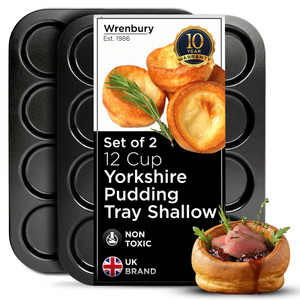
The 12 Cup Tin makes classic individual puddings, the right size for a Sunday roast for a family, with spares, because there are never leftovers. The 4 Cup Tray makes giant Yorkshires in 8.5cm cups, 2.5cm deep: the kind you fill with sausages and onion gravy and call a meal. Plenty of kitchens end up with both, and batch bakers can pick either as a set of two 12-cup trays or a set of two 4-cup trays. Not sure which suits your oven and your table? Our Yorkshire pudding tin buying guide walks through the choice.
One tin, many dinners
The shallow cup shape also makes short work of toad-in-the-hole portions, drop scones, individual tarte tatins, and burger buns. The 4-cup tray doubles as a giant cookie or skillet-brownie tin.
Getting the rise
Rest your batter, get the fat smoking hot in the tin before the batter goes in, and do not open the oven door for the first 20 minutes. The tin does the rest; that is what it is designed for. If your last batch came out flat, the fix is usually one of five things, and our guide to why Yorkshire puddings don't rise covers all of them. For the full method from batter to table, there's the ultimate Yorkshire pudding guide.
You can, but the result is different. Muffin cups are narrower and deeper, so the batter steams rather than climbs and you get a doughy middle with less crisp shell. A Yorkshire pudding tin's wide, shallow cups let the batter spread thin and rise up the sides, which is where the height and crunch come from.
Why do my Yorkshire puddings stick to the tin?
Nine times out of ten the fat wasn't hot enough when the batter went in. The fat needs to be smoking before you pour, so the batter starts frying on contact instead of gluing itself to the cup. A worn or scratched coating on an old tin makes it worse. Our tins pair a non-stick coating made without PFOA or PTFE with that hot-fat start, so the puddings lift out whole.
What size are the cups?
The 12 Cup Tin bakes classic individual puddings sized for a Sunday roast. The 4 Cup Tray bakes giant Yorkshires in cups 8.5cm across and 2.5cm deep, big enough to fill as a main course.
Is the non-stick coating PTFE-free?
Yes. Both Yorkshire pudding trays use a non-stick coating made without PFOA or PTFE, applied over heavy-gauge carbon steel. It is built for the high, dry heat Yorkshire puddings need.
Will the tray warp at high oven temperatures?
No. Warping happens when thin metal heats unevenly and twists. These trays are heavy-gauge carbon steel with rolled edges, so they sit flat on the shelf and stay flat at roasting temperatures, and every pudding cooks at the same rate. They are guaranteed for 10 years.
Should I buy the 12 cup or the 4 cup?
The 12 cup for classic individual puddings with a family roast; the 4 cup for giant Yorkshires you can serve as the meal itself, toad-in-the-hole included. If you batch cook for the freezer, take either as a set of two.