
Posted by Mia Wren on 22nd Dec 2025
How to Make Yorkshire Puddings Rise Tall
If your Yorkshires come out flat, soggy in the middle, or welded to the tin, it almost certainly isn't your recipe. Four eggs, some flour, some milk — that part has barely changed in two hundred years. What goes wrong is nearly always heat: how hot the oven is, how hot the fat is, and how well the tin holds onto that heat once cold batter hits it.
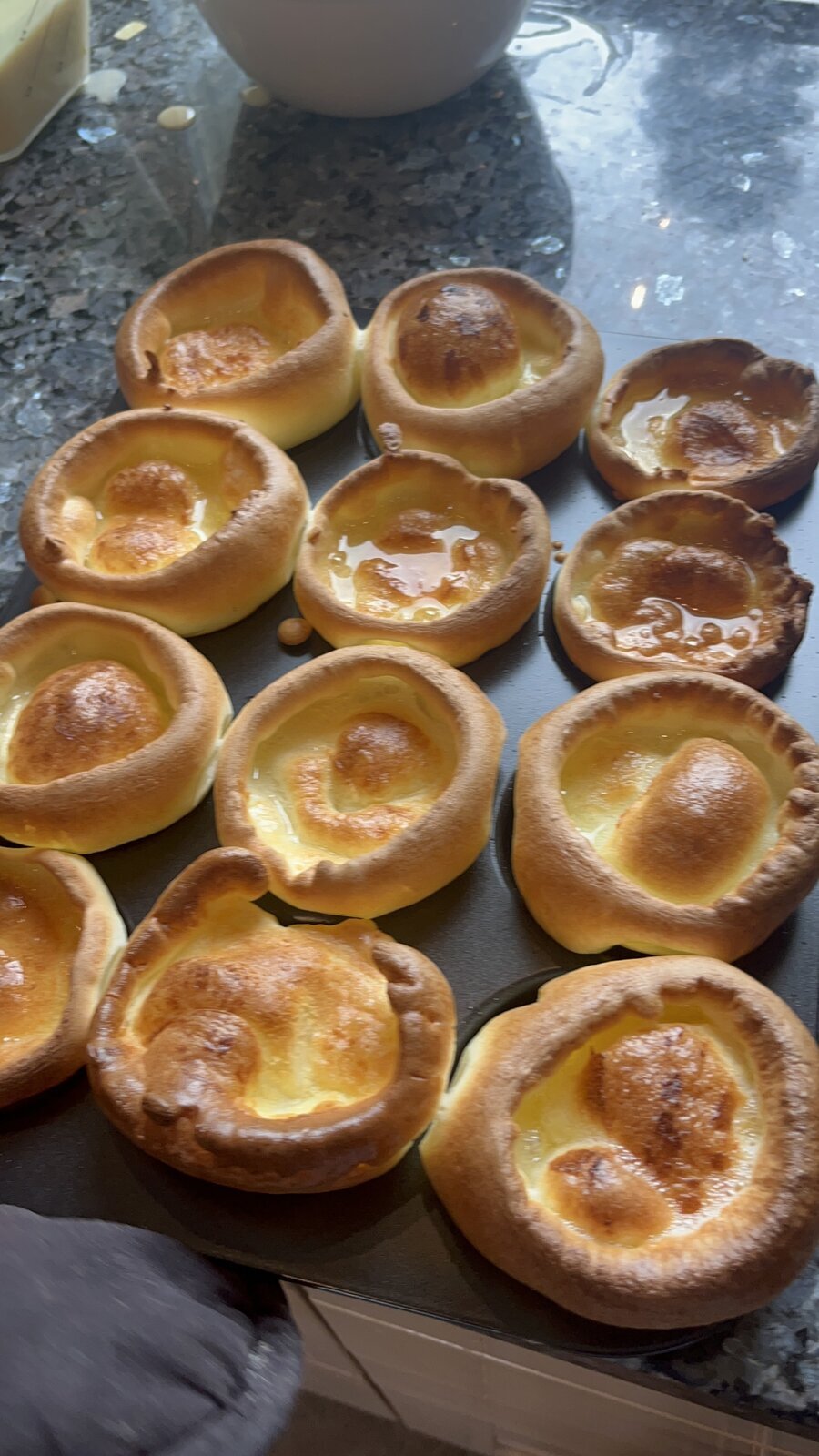
Get those three right and a plain batter turns into the tall, golden, crisp-edged Yorkshires that make a roast feel like a proper roast. Everything below comes from our own kitchen — we baked the same batter in three different tins to see what actually changes the result, and the photos are exactly what came out of the oven.
The three non-negotiables
Everything else is detail. These three are the difference between a tray that rises and one that sulks.
A properly hot oven. Yorkshires rise on a blast of heat that flashes the moisture in the batter to steam. Most good results sit around 220°C, or 200°C fan. Give it a full preheat — not the moment the dial says it's ready, but a few minutes past, so the oven walls are genuinely hot.
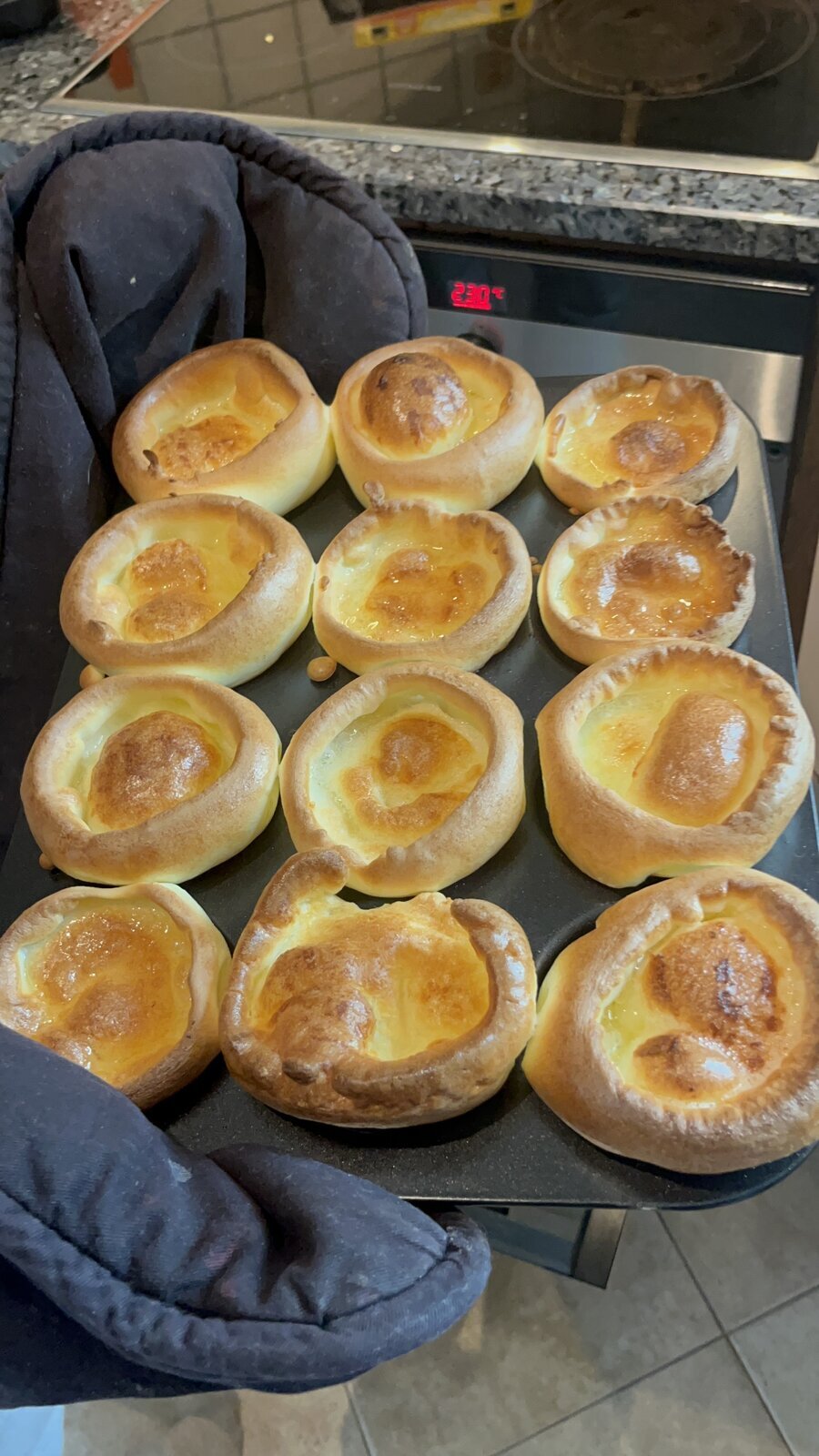
Smoking-hot fat in a hot tin. The fat has to be hot enough that the batter sizzles the instant it lands. That sizzle is the puff starting. Pour into lukewarm fat and you get a dense, greasy pudding that never climbs.
Watch: the secret in practice
A closed oven door. It's a steam-powered trick, and steam escapes the moment you open the door. No peeking for the first 20 minutes, however tempting.
The batter: simple, smooth, left alone
A Yorkshire batter is eggs, flour and milk, sometimes loosened with a splash of water. There's no secret ingredient, so don't go looking for one. What matters is technique, not the shopping list.
Whisk it properly so there are no pockets of dry flour, get it to a pourable consistency — think single cream, not thick batter — and then leave it alone. Even 15 to 30 minutes of rest lets the flour hydrate and the bubbles settle, which helps the rise. Make the batter first, before you prep anything else, and it rests itself while you get on. (Resting batter is one of our 6 secret baking tips — small habits that quietly fix a lot.)
The tin: where most Yorkshires are won or lost
People blame the batter. It's usually the tin.
A light, thin tray loses its heat the second cold batter hits it, so the sizzle dies and the rise never gets going. You also get the back-of-the-oven problem: a couple of golden ones at the front and pale, hesitant ones at the back, because thin metal can't distribute heat evenly — and the same flimsy steel tends to buckle and warp over time, which makes it worse with every roast. And cup depth matters more than most people realise. Deep cups give you a dense, bready pudding; shallower cups give you a crisp, dramatically risen Yorkshire with a natural well in the middle for gravy.
What you actually want is heavy-gauge carbon steel that holds its heat through the cold-batter moment, distributes it evenly across every cup, and has a non-stick coating that actually releases so the puddings lift out instead of clinging.
We baked the same batter in three tins
To show how much the tin shapes the result, we made one batch of batter and split it across three Wrenbury tins: the 12-cup Yorkshire pudding tray, the 4-cup Yorkshire pudding tray, and the 6-cup jumbo muffin tray. Same batter, same oven, same fat. The only variable was the tin — and you can see the difference lined up side by side.
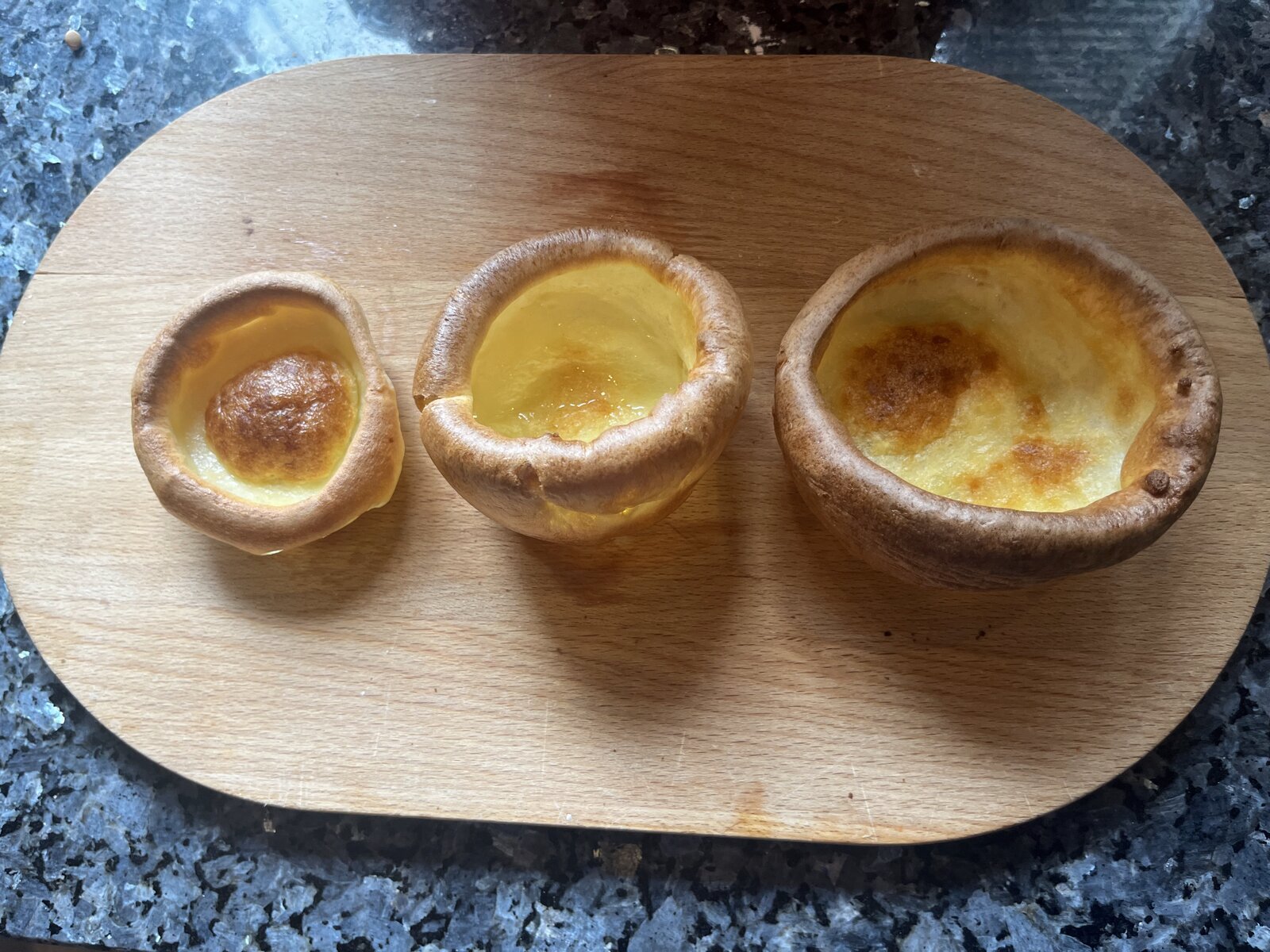
The 12-cup tray gave a dozen neat, shallower puddings with crisp edges and a wide gravy well — the right call when you want one each with seconds, or a full table served at once. The 4-cup tray made bigger individual Yorkshires with taller sides, still crisp through the base: the "everyone gets a proper big one" option. The jumbo muffin tray pushed it furthest — deep, steep-walled puddings tall enough to pile high with roast and gravy (it's just as happy turning out café-style muffins the rest of the year). None of them stuck, and the difference came entirely from the tin, not the batter.
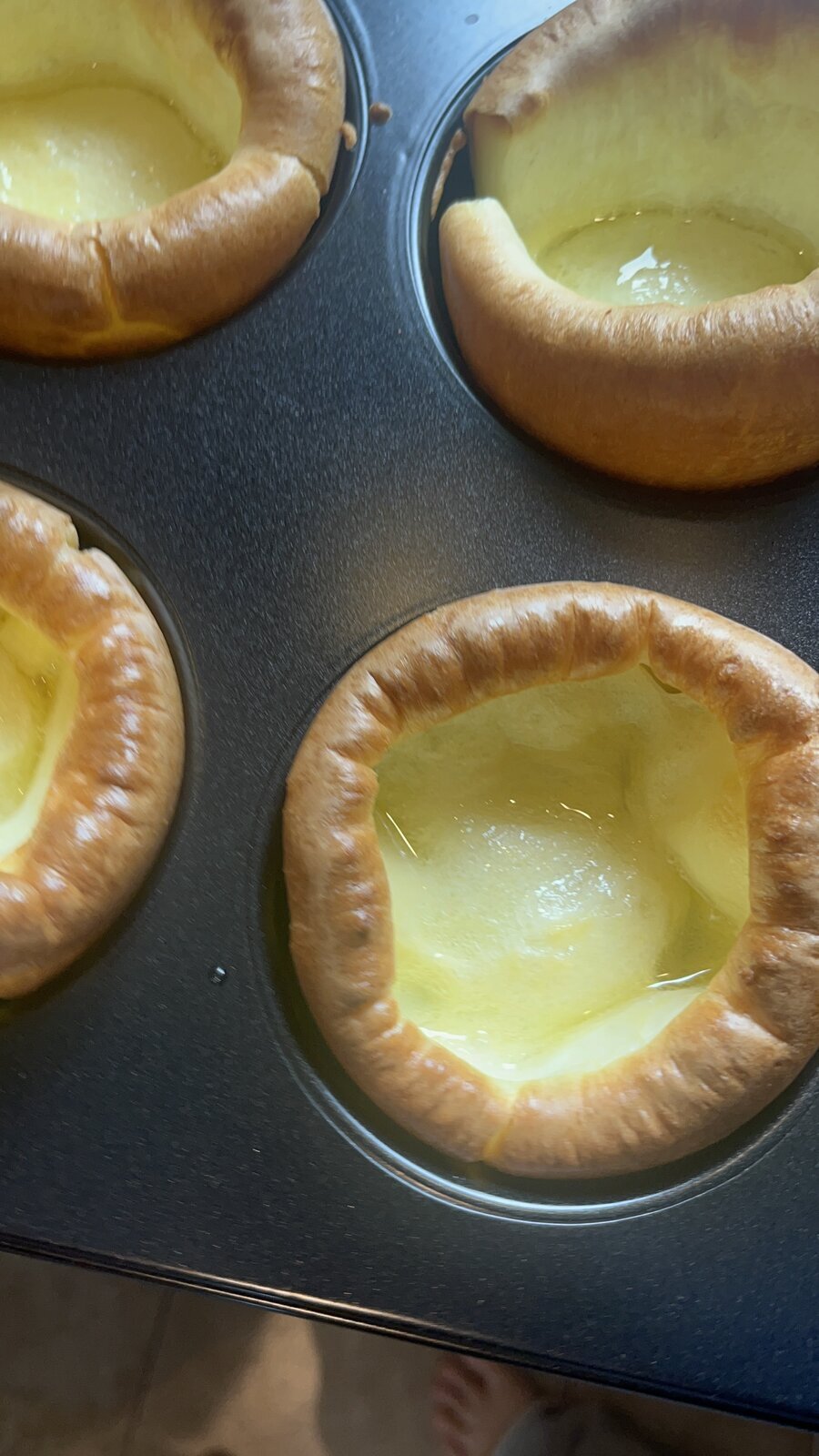

12 Cup Yorkshire Pudding Tray
£17.99
A neat dozen, crisp with a wide gravy well — a full table in one tray.
View product
4 Cup Yorkshire Pudding Tray (Set of 2)
£29.99
Bigger individual puddings with tall sides — eight from two trays.
View product
6 Cup Jumbo Muffin Tray
£21.99
Deep 10cm cups for towering, steep-walled showstopper puddings.
View productWhichever size you're after, the tin does the heavy lifting: heavy-gauge carbon steel that holds its heat, PFOA and PTFE-free non-stick that releases cleanly, and a 10-year guarantee behind it. Browse the full Yorkshire pudding tin range to pick your size.
The fat: what's best, honestly
This one gets passionate, so here's the practical view. Any fat works as long as it can take the heat without smoking out your kitchen — Yorkshires bake hot, so a low smoke point is a real problem. Beyond that, it's mostly about flavour.
| Fat | Flavour | Approx. smoke point | Verdict |
|---|---|---|---|
| Beef dripping (tallow) | Rich, classic roast-dinner | ~205°C | The traditional choice if you've got it |
| Sunflower oil | Clean, neutral | ~225°C | Reliable all-rounder, great rise |
| Rapeseed oil | Mild, slightly nutty | ~220°C | Excellent, and usually British |
| Vegetable oil | Neutral | ~205–220°C | Perfectly good everyday option |
Smoke points are approximate and vary by brand and refinement. The short version: if you have beef dripping, use it for the flavour. If you don't, reach for a neutral oil and don't let anyone tell you you've done it wrong.
Step by step
Yorkshire puddings that actually rise
- Preheat properly: get the oven to 220°C / 200°C fan and give it a few minutes past temperature so it's genuinely hot.
- Make the batter: whisk eggs, flour and milk smooth, get it pourable, and leave it to rest while you prep.
- Add fat to each cup: a small amount per cup is plenty — this isn't the day for austerity.
- Heat the tin: put the tray with the fat in the hot oven until the fat is shimmering and almost smoking.
- Pour and listen: add the batter quickly into the hot fat — it should sizzle on contact.
- Bake and wait: bake until deep golden and crisp, and keep the door shut for the first 20 minutes.
Toad in the hole: the same trick, scaled up
Toad in the hole is a giant Yorkshire with sausages in it, and it follows exactly the same rules. The fat and tin need to be properly hot before the batter goes in, so brown your sausages first in the fat, in the tin, in the oven — then pour the rested batter straight around the hot sausages and get the door shut. A shallow, heavy tray works here too: it gives the batter a crisp base and risen edges instead of a pale, doughy slab. Resist the urge to crowd it; the batter needs room to climb.
Making them ahead
Yorkshires are best straight from the oven, but they reheat better than their reputation suggests, which is genuinely useful when the oven is fighting for space on a roast. Bake them fully, let them cool completely on a rack so they don't go soft, then keep them airtight. To bring them back, blast them in a hot oven — around 220°C for a few minutes — until crisp again. Microwaving turns them to rubber, so don't. Cooled Yorkshires also freeze well and reheat from frozen in the same way, which means you can bake a big batch when you've got time and reheat as you need them. Dry the tin properly afterwards and it'll keep giving you clean bakes — here's how to make a baking tray last 10 years.
Common questions
Why are my Yorkshire puddings flat?
Almost always heat. The oven wasn't hot enough, the fat wasn't smoking before the batter went in, or the tin was too light and lost its heat the moment cold batter hit it. Batter that's too thick can also weigh them down — aim for a pourable, single-cream consistency. For a deeper look at the rise itself, see our guide on why Yorkshire puddings don't rise.
Why did they rise and then collapse?
Usually they came out too soon. The structure is still soft and steamy inside until the very end of the bake, so a Yorkshire pulled early deflates as it cools. Opening the oven door mid-bake does the same thing — the rush of cool air drops the temperature at the worst moment. Give them the full bake and keep the door shut.
Why are my Yorkshires soggy in the middle?
Too much batter per cup, not enough bake time, or an oven running cooler than the dial claims. Shallower cups help here, because the batter sets and crisps rather than staying wet in a deep well. Don't overfill — the batter needs room to climb the sides.
How do I stop Yorkshire puddings sticking?
Three things: a tin with reliable non-stick, fat that's genuinely hot before the batter goes in, and enough fat in each cup to begin with. Hot fat creates a barrier between batter and metal from the first second. A heavy-gauge tray with a non-stick coating that lasts does the rest — across three different tins in our own test, not one pudding stuck.
Can I use a muffin tin instead of a Yorkshire pudding tin?
You can, and a jumbo muffin tray makes a brilliant tall, deep Yorkshire — we used one in our test. The thing to know is that deeper cups give you a taller, more bowl-shaped pudding, while a dedicated shallow tray gives you the wider, crisp one with an open gravy well. Pick the shape you want.
Fan oven or conventional?
Either works. As a rough rule, set a fan oven about 20°C lower than a conventional one for the same effect — so around 200°C fan against 220°C conventional. Fan ovens circulate heat well, which suits the even bake Yorkshires want.
The bottom line
Great Yorkshires are mostly heat management: a properly hot oven, smoking-hot fat, a tin solid enough to hold its heat, and the patience to leave the door shut. Nail those and the batter looks after itself. Our three-tin test made the point plainly — same batter every time, and the tin decided whether we got a neat dozen, a big individual each, or a towering jumbo. The one thing most kitchens are missing isn't a better recipe — it's a tin that doesn't quit the moment the batter lands.