
Posted by Mia Wren on 19th Jan 2026
Bakeware That Doesn't Warp: Why It Happens and What to Do About It
I've heard that bang from the oven more times than I care to admit. You slide a tray in, close the door, and a couple of minutes later there's a sharp crack and the tin has buckled. Sometimes it settles back to flat as it cools. More often, it doesn't.
The tin rocks on the worktop. Batter runs to one corner. Fat pools on one side of a Yorkshire pudding tray, leaving the opposite cups dry. It's one of those problems that seems minor until it ruins a Sunday roast or a batch of cupcakes that should have been straightforward.
The good news is that warping isn't mysterious. There's a clear reason it happens, and it mostly comes down to the tin itself — how thick the metal is and what it's made from. Here's what's actually going on, and what to look for if you want bakeware that holds its shape. If you want the care side of this covered too, read our companion guide to making your baking tray last 10 years.
Why bakeware warps in the first place
Metal expands when it heats up. That's basic physics, and it applies to every tin in your kitchen. The problem isn't expansion itself — it's uneven expansion.
When you put a cold tin into a hot oven, different parts of it heat up at different rates. The thinner sections — typically the edges and flat base — respond to the heat differently from the thicker points where the metal folds or is reinforced. That differential stress has to go somewhere, and it goes into a warp. The bang or pop you hear from the oven is the exact moment the tin gives way to it.
The same thing happens in reverse. Pull a hot tin straight under cold running water, and the rapid contraction causes exactly the same problem — a permanent twist the metal won't recover from.
What determines how badly a tin warps? Mostly the thickness of the metal and the material it's made from. Thin, light-gauge aluminium has very little resistance to thermal stress. Under that pressure, the metal gives almost immediately — and once warped, it stays warped. Heavier-gauge steel distributes heat more evenly and has the rigidity to resist the same forces. A quality tin may flex slightly under heat but returns to flat as it cools. A cheap one doesn't come back.
This is why a £4 tin usually warps within six months of regular use, and a well-made one holds its shape through years of the same treatment.
The two things that make the biggest difference
Most advice about warping comes back to phrases like "buy better quality." What that actually means, in physical terms, is this:
Gauge is the first thing to check. Gauge refers to the thickness of the metal. Thicker tins — heavier when you pick them up — have more mass to absorb and distribute thermal stress. If you can flex the base of a tin by pressing it with your hands, it will warp in the oven. If it barely gives at all, it has a fighting chance.
Material is the second. Carbon steel is denser and more rigid than thin aluminium, which is why it holds its shape better at high temperatures. The same properties that make it a good conductor of heat also make it resistant to buckling under it. A heavy carbon steel tin sits on the worktop with a solidity that a pressed aluminium tray doesn't. That physical sense of weight is meaningful — it's directly connected to how the tin will behave at 200°C.
Both of these factors tend to correlate with price. There's no way to make heavy-gauge carbon steel cheaply. But the gap between a tin that lasts a year and one that lasts a decade is usually £10–£15 over the lifespan of the tin — which makes the maths reasonably clear.
What you do also matters
Three habits that shorten the life of any baking tin
- Putting a cold tin straight into a very hot oven: The bigger the temperature gap, the more sudden the thermal stress. A tin that's been in a cold cupboard going into an oven at 220°C is a significant shock. It won't ruin the tin on the first occasion, but it accumulates over time.
- Running cold water over a hot tin: The rapid contraction from hot to cold creates the same internal stress as rapid heating — the metal distorts by absorbing it. Let tins cool before washing them, and they'll last considerably longer.
- Loading one side of the tray: If weight is concentrated on one end, that section is under more physical pressure while the whole tin heats up. On a thin tin, this can cause a twist even at moderate temperatures. Distribute whatever you're baking reasonably evenly across the surface.
None of this requires treating your bakeware with particular care — you shouldn't need to. It's about avoiding the habits that add unnecessary stress to even a well-made tin. For more on keeping bakeware in good shape, the Wrenbury care and use guide covers the essentials.
What to look for when you're replacing a tin
When a tin warps badly enough that it rocks on the oven shelf or consistently gives uneven results, it's usually time to replace it rather than fight it. Here's what to look for:
Weight is the easiest test. Pick the tin up. If it feels light or flimsy, it will warp. Carbon steel tins have a noticeable heft to them — that's not incidental.
Rolled or reinforced edges. Look at the rim. If it's a thin, folded edge, that's the first place the tin will flex. A rolled or reinforced rim adds structural rigidity and is a good sign of a better-made product.
A warranty. Most cheap bakeware comes with no warranty because the manufacturer knows it won't last. A brand offering a 10-year guarantee is making a specific claim about the gauge and construction they're using — and if the tin warps under normal conditions, you have grounds for a replacement.
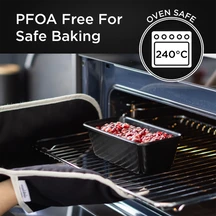
All Wrenbury tins are made from heavy-gauge carbon steel, PTFE and PFOA free, and backed by that 10-year guarantee. These are the tins from the range that come up most often when bakers ask specifically about warping:
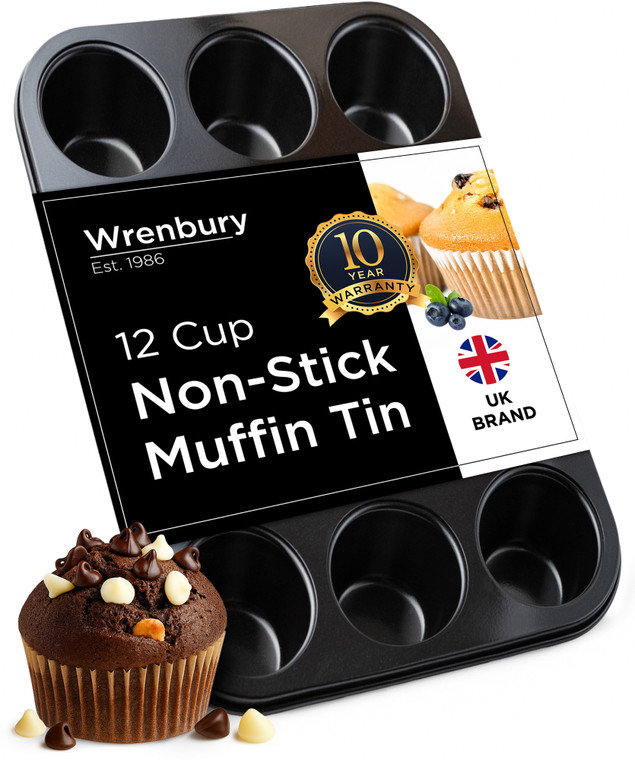
Non-Stick 12 Cup Muffin Tray
£21.99
Heavy-gauge carbon steel that heats evenly and holds its shape through repeated use.
View product
12 Cup Yorkshire Pudding Tin Tray
£19.99
Flat on the shelf so the fat distributes evenly — no rocking, no puddings starved of heat on one side.
View product
Non Stick 1lb Loaf Tin Pan
£13.99
Heavy carbon steel that stays flat and releases cleanly — no twisting after a year of regular use.
View productBrowse the full muffin and cupcake tin range or the loaf tin range if you want to see the other sizes available. If you're buying a Yorkshire pudding tin specifically, the Yorkshire pudding tin buying guide covers material, cup size, and what to look for in more detail.
Common questions about bakeware warping
Can you fix a tin that's already warped?
It depends how badly. A mild warp — the tin sits slightly unevenly but the distortion is small — can sometimes be corrected by placing it face-down on a flat surface and applying firm, even pressure once it's fully cooled. For anything more than a minor buckle, the metal has been stressed past recovery. It won't bake evenly, and it's better to replace it.
Why did my new tin warp on the very first use?
This usually means the gauge is too thin for the heat it was put into. First-use warping is a sign the manufacturer cut costs on the thickness of the metal. It's not something you did wrong — the tin wasn't built to handle the job from the start. A heavier tin will flex slightly under heat but return to flat as it cools. First-use warping is actually one of the cleaner ways to identify a tin that won't last.
Are silicone tins better for avoiding warping?
Silicone doesn't warp in the conventional sense, but it introduces different problems. It's inherently flexible, which means it provides no structural support for the bake — cakes can come out misshapen, muffin cases lean at angles, and filling a silicone muffin tin with liquid batter without spilling is genuinely difficult. For most home bakers, the answer to warping isn't switching material — it's getting a heavier tin in the same material you're already using.
Does a warped tin actually affect the results?
More than most people realise. A tin that rocks on the oven shelf will tilt, which means liquid batter distributes unevenly from the start. Fat in Yorkshire pudding cups, batter in muffin holes, and wet bread dough in a loaf tin all run to the low end. The result is uneven rise, uneven browning, and — in Yorkshire puddings — cups on the high side that don't get enough fat to crisp up at the base. If you've been blaming your Yorkshire pudding batter, it's worth checking whether the tray sits level on a flat surface first.
The last tin you'll need to replace
Warping is easy to solve once and frustrating to keep solving every year or two. A tin that holds its shape through years of high-temperature use doesn't need special handling — it just needs to be made from the right material at the right thickness.
If you're due a replacement, the full Wrenbury bakeware range covers all the essentials — loaf tins, Yorkshire pudding tins, muffin trays, mince pie tins, and more. Every piece is heavy-gauge carbon steel, PTFE and PFOA free, and backed by a 10-year guarantee. If you want to read the buying guide for a specific tin first, the best loaf tin UK guide is a good starting point for loaf bakers.