
Posted by Mia Wren on 14th Aug 2026
Best Mini Cheesecake Tin UK: What to Look For Before You Buy
Most mini cheesecake disasters happen in the last thirty seconds. The bake went well, the tops set without a crack, everything cooled properly. Then the first one comes out in two pieces with the biscuit base still stuck to the tin. At that point the recipe was never the problem.
Individual cheesecakes are unforgiving in a way a full-size one isn't. A big cheesecake has one release, and you get to run a knife round the edge and take your time. A tray of twelve has twelve releases, and if the tin fights you on the first one you already know how the other eleven are going to go. So the tin matters more here than it does almost anywhere else in baking.
This guide covers what actually separates a mini cheesecake tin that works from one that doesn't, and what to check before you spend anything.
Loose base, springform, or neither
There are three ways a mini cheesecake tin can be built, and the choice decides most of your experience with it.
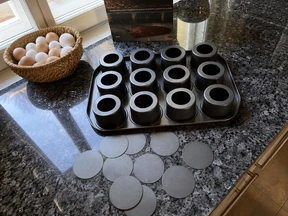
Loose base. Each cup has its own removable metal disc sitting in the bottom. You press up from underneath and the cheesecake rises out whole, biscuit and all. This is the design that suits individual cheesecakes best, because the release is vertical and even. The dessert never has to be tilted, slid or persuaded sideways.
Mini springform. A collar that unclips from a base, in miniature. These work, but you are buying six or twelve separate tins that each need washing, storing and lining. The clips are also the first thing to go on a cheap set.
Solid cup, no removable base. A muffin tray, essentially. Fine for a baked cheesecake you are happy to spoon out or serve in a case. For anything you want standing free on a plate with a clean edge, it is the wrong tool, and no amount of greasing changes that.
For a tray of twelve identical individual cheesecakes, the loose base wins on the thing that matters: it is the only one of the three where getting the dessert out is a single upward push rather than a manoeuvre.
What to look for
Gauge of the steel
This is the first thing to check and the easiest to check badly, because thickness is rarely printed on the box. Pick the tin up. A tray of twelve cups that feels light in the hand has thin steel, and thin steel does two things you won't like: it flexes when you press a base up, which cracks the cheesecake you were trying to release, and it distorts in the oven, which means the cups no longer sit level and the bases stop seating properly.
Look for 1mm carbon steel with rolled edges. A twelve-cup tray built that way weighs somewhere over a kilo, and the weight is the point. It is also the difference between a tin that stays flat for a decade and one that develops a rock in its first year. We have written about why bakeware warps separately, and cheesecake trays are one of the worst offenders because the cut-outs for the loose bases remove material that would otherwise stiffen the tray.
How well the bases fit
The loose base is the whole design, so the tolerance on it matters. Too loose and raw cheesecake mixture creeps down the gap and welds the disc in place. Too tight and the disc will not push up cleanly at all.
You cannot always check this before buying, but you can check it the moment it arrives: hold the tin up and look at the underside. The discs should sit flush without rattling, and they should drop back into place without being forced. If a base sits proud of the cup floor, filling will run underneath it every time.
Cup size and depth
7.5cm across and around 5cm deep is a genuine single serving, a cheesecake somebody eats as a dessert rather than a canapé. Shallower cups, in the 3cm range, are really a mini muffin tray being sold as something else, and they will not hold enough filling above a biscuit base to look like a cheesecake.
Depth also affects the bake. A deeper cup gives the filling a bit of insulation from the sides, which is part of why individual cheesecakes crack less than people expect.
The coating
The complaint that comes up again and again with cheap mini cheesecake pans is coating failure: flaking after a few washes, or a finish that has bubbled in manufacture and lifts the first time anything touches it. On a tin with twelve cups and twelve separate discs, that is a lot of surface area to go wrong.
Wrenbury's non-stick is made without PTFE or PFOA, oven safe to 230°C, and it is the part of the tin the guarantee is really there to cover. If a coating peels or blisters in normal home use, that is a defect rather than wear. Our carbon steel and non-stick comparison goes further into how the two work together.
Rust on the discs
Worth knowing before it surprises you: the loose discs are the part most likely to rust, because they are small, they get separated from the tin, and they are easy to leave in the rack to air dry. Carbon steel does not tolerate that. Dry the discs with a tea towel straight after washing and put them back in the tin, and the problem does not arise. This is true of all carbon steel bakeware and it is the same bargain you accept with a good frying pan.
The water bath question
Ask about mini cheesecakes online and somebody will tell you to use a water bath, and somebody else will tell you a water bath and a loose base cannot coexist. Both have a point.
A loose-base tin is not watertight. That is not a fault; it is the mechanism. So sitting one directly in a tray of water will let water in around the discs, and you will get a soggy biscuit layer.
The good news is that individual cheesecakes rarely need one. A water bath exists to moderate the heat reaching a large, deep mass of filling so the outside doesn't overcook before the middle sets. A 7.5cm cheesecake does not have that problem. It is small enough to set evenly at a moderate oven temperature. Bake at a lower temperature, take them out while the centres still have a slight wobble, and let them finish setting as they cool.
If you want the insurance anyway, put a roasting tin of hot water on the shelf below rather than around the tin. You get the humidity without the leak. Our mini cheesecake baking time guide has the temperatures and timings for both baked and chilled versions.
The tin we make
Twelve cups, each with a loose base you press from underneath. The 1mm steel is the heavier commercial sort, which matters most at the moment of release: a light tray flexes as you push, and the flex is what cracks the cheesecake. It weighs 1.2kg empty, and that is deliberate.
The cups are not single-purpose either. They take deep quiches, pork pies, millionaire shortbread and egg bites, which is a reasonable argument for the twelve-cup tray over a set of six mini springforms that only ever do one job. The same logic applies across our muffin and cupcake tins, where cup depth decides far more than the name on the box.
If a disc goes missing down the back of a drawer, spare bases are sold separately in sets of six rather than you having to replace the tin. They are cut to 6.6cm to fit the cups. Worth checking availability, as they go out of stock periodically.
An independent baker ran a full recipe test on the tin with roasted strawberry mini cheesecakes, and her write-up is worth reading if you want to see it used by someone who does not work here: read her review.
Getting a clean release
How to release mini cheesecakes from a loose-base tin
- Chill them properly: this is the step people skip. A cheesecake at room temperature is structurally soft, and it will tear no matter how good the tin is. Cold and firm, ideally several hours.
- Grease the cups lightly: including the disc, before you fill. The coating does the work but a trace of oil helps on the vertical wall.
- Add parchment for chilled versions: a small disc on each base. Baked cheesecakes usually do not need it.
- Free the top edge: run a thin palette knife round it if the filling has caught on the rim.
- Press from below: stand the tin on a jar narrower than the cup and push the disc up steadily. Steady is the word, because a quick shove cracks the top.
- Transfer to the plate: slide the cheesecake off the disc with a palette knife, or serve it on the disc if you would rather not risk it.
The guarantee
Every Wrenbury tin carries a 10-year guarantee. If the coating peels or blisters, or the tin warps, we repair or replace it. On a cheesecake tin that guarantee is doing more work than it looks, because coating failure and a warped tray are exactly the two ways this design goes wrong. Fair wear and tear, metal utensil damage and commercial use are not covered, and the full terms are on the warranty page. Looking after it properly is not complicated, and the care and use guide covers it in a page.
Frequently asked questions
Why does my mini cheesecake stick to the base even in a non-stick tin?
Almost always because it was not cold enough. A non-stick coating stops the filling bonding to the metal, but it cannot make a soft cheesecake structurally sound. Chill it thoroughly, several hours or briefly in the freezer, and the same tin that fought you will release cleanly. A disc of parchment on the base is worth it for no-bake versions, which stay softer.
Can I use a loose-base tin in a water bath?
Not sitting in the water, no. The loose bases are not a seal and water will get in. Put a tray of hot water on the shelf below instead, which gives you the humidity without the leak. Individual cheesecakes are small enough that they usually set evenly without one anyway.
Will the non-stick coating flake off?
It should not, and if it does in normal home baking that is a warranty claim rather than something to live with. What shortens a coating's life is metal utensils, abrasive scourers and the dishwasher. Hand wash with a soft sponge and a coating lasts years.
Do the loose bases rust?
Only if they are left wet. They are the part most likely to go because they are small and easy to leave draining. Dry them with a tea towel straight after washing and return them to the tin. An occasional wipe of oil helps if you bake rarely.
What size are the cheesecakes it makes?
7.5cm across and up to 5cm tall, twelve at a time. That is a proper individual dessert rather than a two-bite one.
What else can I bake in it?
Deep quiches, pork pies, millionaire shortbread, egg bites, and individual sandwich cakes. Anything that benefits from being pushed up rather than tipped out.
The short version
Buy on gauge and on how the bases seat. A heavy tray with well-fitted discs will release twelve cheesecakes cleanly for years; a light one will crack them as it flexes, and no technique fixes that. Everything else (coating, guarantee, cup depth) matters, but it matters second.