
Posted by Mia Wren on 22nd Jan 2026
Mini Cheesecake Baking Guide
Your Wrenbury 12 Cup Loose Base Cheesecake Pan
Make dessert worth bringing to the table.
Get the bases ready, know what to look for as the filling sets and lift out each chilled cheesecake for serving.
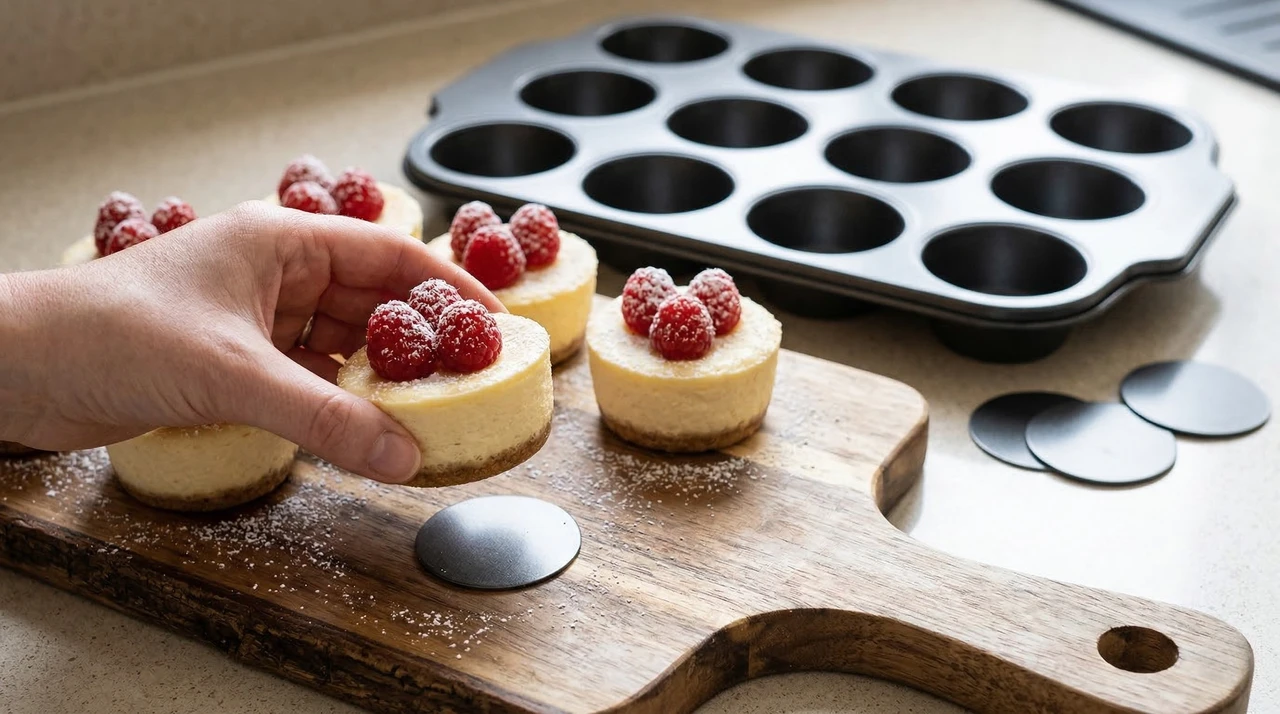
Start with the loose bases.
Each of the twelve cups has its own removable disc. That means you can lift the cheesecake from underneath when it is firm, keeping the biscuit base and soft filling together.
Check all twelve discs are in place.
Before filling, sit each disc flat in the bottom of its cup. Hold the tin by its edges when moving it so you do not accidentally push a base upwards.
Prepare an even biscuit layer.
Use your recipe’s biscuit-to-butter ratio and divide the mixture evenly. Press it down firmly, including around the edges. A light greasing or a small circle of baking parchment on each disc can help with release.
Loose bases are not watertight. Do not stand this tin in a water bath. A little melted butter may escape through the joins, so sit it on a rimmed baking tray to catch drips. Use a recipe suitable for mini cheesecakes without a water bath.
A recipe made in this pan
Roasted strawberry mini cheesecakes.
Ella’s Better Bakes made roasted strawberry mini cheesecakes in the Wrenbury loose-base tin. Her recipe takes you through the biscuit base, filling and topping, with both baked and no-bake options.
Keep the quantities, oven setting and chilling instructions from the same recipe. Changing the filling or portion depth changes how long it takes to set.
How long should mini cheesecakes bake?
For a classic baked filling in this pan, start at 155°C (140°C fan) for 28 to 32 minutes, and begin checking at 25. Each cup is about 7.5cm across, so these bake far quicker than a full-size cheesecake.
Treat that as a starting point. Ovens vary, and a different filling or a shallower fill changes the time. If your recipe gives its own time and temperature, follow those. Either way, go by the wobble: the edges should be set while the centre still has a gentle wobble, like set jelly, rather than a liquid ripple. A completely firm centre in the oven can mean the filling has baked too far.
Then cool gently. Turn the oven off, leave the door ajar for 5 minutes, let the tin cool to room temperature and chill for at least 2 hours before attempting release. An evening in the fridge is often the easiest way to plan ahead.
Pan limit: 230°C / 446°F. Cheesecakes generally bake well below this. The pan’s maximum temperature is not a recommended cheesecake baking setting.
Chill first, then lift from underneath.
Let the filling set fully.
Follow your recipe’s cooling and refrigeration instructions. A cheesecake that feels soft while warm needs time to firm up; trying to release it early can break the biscuit base or sides.
Push up gently.
With the pan cool and the cheesecake fully chilled, support the tin and gently press the disc upwards from underneath. If an edge catches, ease it with a flexible silicone utensil. Do not force it or scrape with a metal knife.
Separate the disc from the base.
Slide a thin, non-metal spatula between the disc and biscuit base while supporting the cheesecake. Remove any parchment before serving. Keep the discs together so they are ready for your next batch.
Finish when you are ready to serve.
Add berries, a spoonful of compote or your recipe’s topping. Keep cheesecakes refrigerated according to the recipe’s storage guidance, and bring them out when you are ready to serve.
A few common questions, answered.
Why is butter leaking from the bottom?
The removable discs sit in the cups without a sealed join. Melted butter can seep through, especially if the crumb mixture contains more butter than the recipe needs. Follow the recipe’s proportions, compact the bases and use a rimmed baking tray beneath the tin to catch drips.
Why have the tops cracked or sunk?
Too much mixing after adding eggs, excessive oven heat and overbaking can contribute. Mix only as much as the recipe requires and follow its cooling method. A small dip or crack does not prevent you from serving a properly baked cheesecake with its topping.
Do I need paper muffin cases?
You do not need muffin cases to use the loose bases. For a delicate biscuit base, a small baking-parchment circle on each disc can make it easier to separate the chilled cheesecake from the metal. Follow your recipe’s greasing instructions.
Can I use a full-size cheesecake recipe?
The filling may be suitable, but the yield and baking time will change. A recipe developed for mini cheesecakes is the easier starting point. Do not use the full-size cake’s time or fill these cups to the rim without checking the recipe’s guidance.
Can I make no-bake cheesecakes in this tin?
Yes, provided the filling is designed to set firmly enough to stand on its own. Follow a mini no-bake recipe and give it its full chilling time. A dessert intended to be eaten from a glass may be too soft to release neatly.
I have lost a base disc. Can I replace it?
Replacement bases for this pan are available in sets of six in our UK shop. Check the product is the matching Wrenbury 12-cup pan before ordering. View the replacement bases.
Look after the discs as well as the tin.
Let everything cool before washing. Remove the discs, hand wash each part in warm soapy water with a soft sponge, then dry thoroughly before putting the pan away. Use wooden, silicone or nylon utensils and avoid abrasive pads, metal knives and prolonged soaking.
Keep the twelve discs together in storage. The pan is for oven use, not a hob, grill or microwave.
English Style Bakeware
Baking, properly thought through.
Wrenbury grew from a local cookshop in Lincolnshire into a family-run bakeware business. We think about the parts of baking that can get in the way, from a fragile cheesecake that needs lifting out to a tin that needs cleaning afterwards.
These guides are part of that care. You make the food; we help you get more from the tin.

For another batch or a baking friend
Get to know the cheesecake pan.
Twelve individual cups and push-up bases help you serve delicate desserts without turning the whole tin over. See the dimensions, current availability and details in our UK shop.